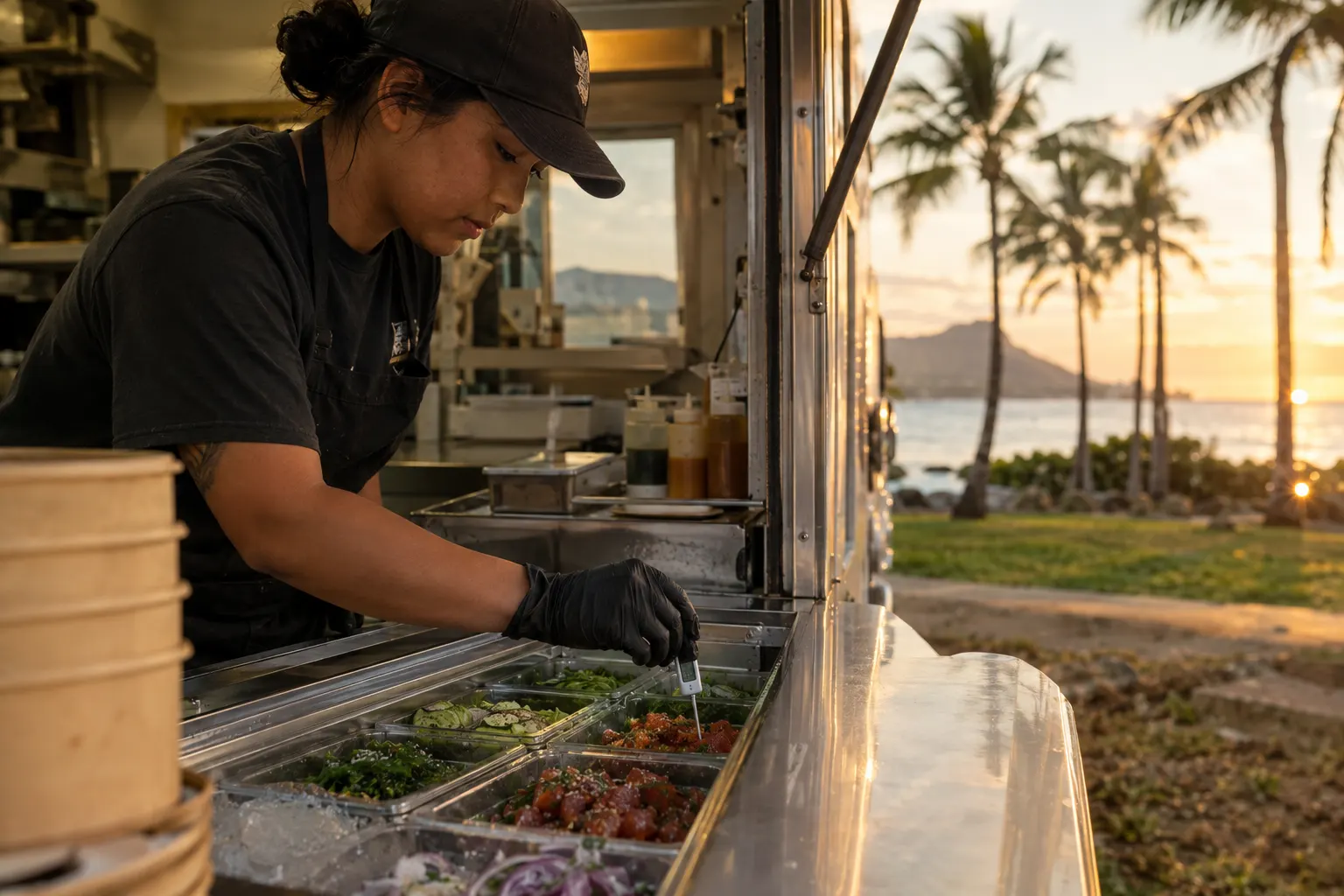
Restaurants, cafés, poke shops and food trucks
If you do sous vide, vacuum packing, curing, smoking or fermenting, or need a variance, Hawaiʻi DOH requires an approved HACCP plan. We write it, prepare the variance paperwork and keep it current.
HACCP · SOPs · DOH variance support · Oʻahu
Fixed-price HACCP plans, SOPs and logs for Oʻahu restaurants, food trucks and food startups. Written by a chef who runs a kitchen and produces a fermented product in a commercial facility.
New since Aug. 24, 2025
Hawaiʻi's updated food safety code requires every food establishment to have a written vomiting and diarrhea clean-up plan. We can write yours as part of the SOP Package.
Two-minute check
Tick anything your business does. The list comes from the Hawaiʻi Department of Health's HACCP guidance. This is a starting point, not a ruling. We confirm with DOH before quoting.
Who we work with
If you do sous vide, vacuum packing, curing, smoking or fermenting, or need a variance, Hawaiʻi DOH requires an approved HACCP plan. We write it, prepare the variance paperwork and keep it current.
Sauces, syrups, baked goods and snacks made in an FDA-registered facility usually need a Preventive Controls Food Safety Plan, which is a different document from a HACCP plan. We'll tell you which one applies.
These fall under their own federal HACCP rules. We map out what applies to your process and the records you'll need to keep.
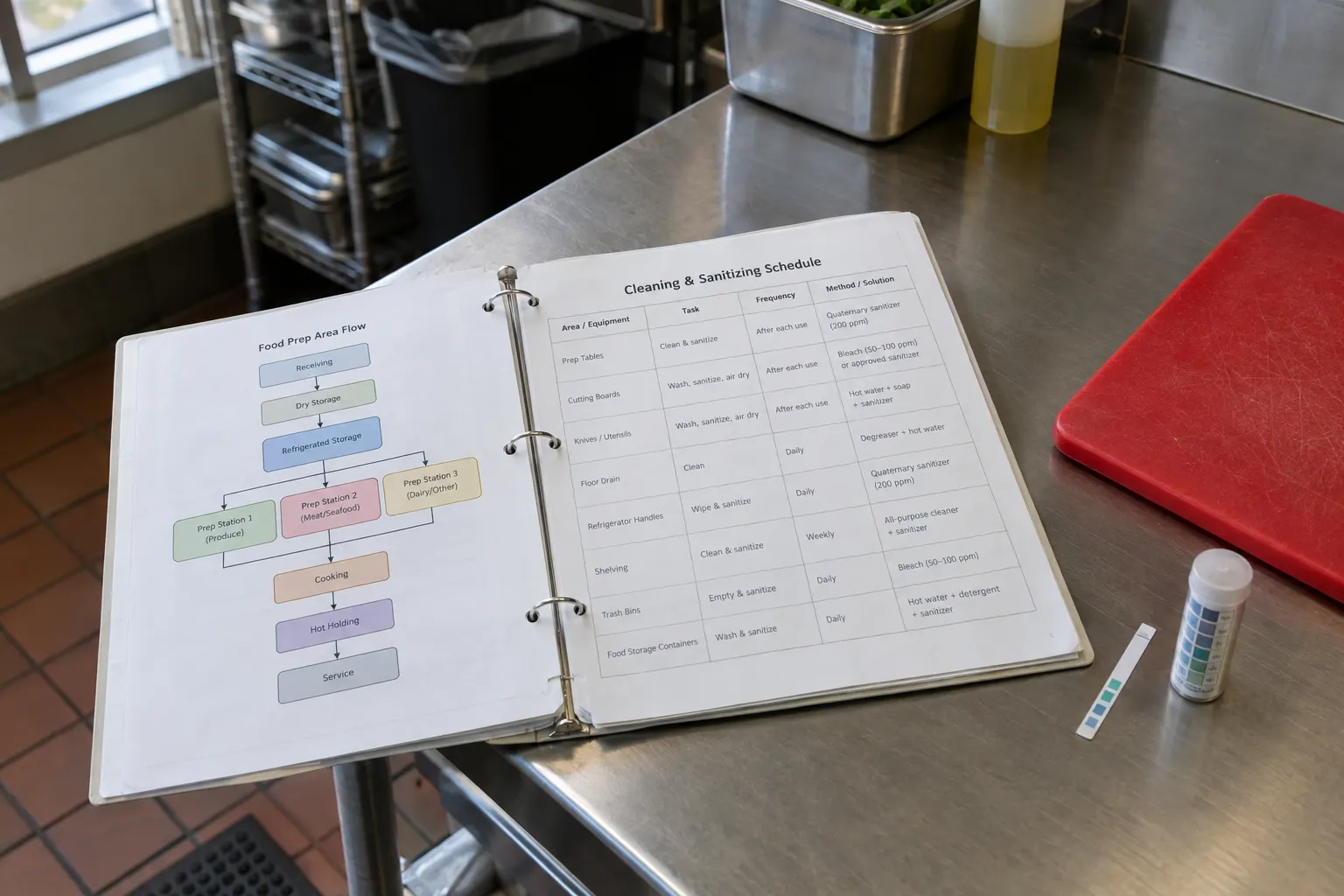
Wholesale buyers and co-packers want SOPs, cleaning schedules, allergen controls and logs before they'll sign. We build the binder that gets you through the door.
Services & pricing
HACCP plans and SOPs for small food businesses on Oʻahu. Based in Wahiawā. HACCP certified. Every job starts with a free talk story call, and you get a firm quote before any work begins.
Start here · 20 minutes
We talk about what you make and how you make it, and I tell you what likely applies to your business. No pressure.
01 · Find the gaps
Starting at$300
An on-site walk-through of your operation plus a written report of what you need, what you have, and what's missing.
02 · Daily basics
Starting at$650
Five to eight core written SOPs, including:
03 · One product line
Starting at$1,500
A complete HACCP plan for one product line with a few critical control points, such as bottled beverages, sauces or baked goods.
04 · Specialized processes
Starting at$2,500
For multiple products or specialized processes like cook-chill, vacuum packing or acidified foods.
Bundle · Best value
Compliance Check + SOP Package + Simple HACCP Plan, bundled. Everything you need to get your foundation set.
$2,200
Bought separately, these start at $2,450.
Ongoing
Log reviews, plan updates when recipes or processes change, and inspection prep.
Starting at$250 / month
As needed
Revisions, extra SOPs, or anything outside your package.
$95 / hour
Founding Client Offer: my first 5 clients get 30% off any service in exchange for a testimonial.
Or email [email protected] · call or text 808-364-4731
How it works
In 20 minutes we go through what you make, how you make it, your equipment and who regulates you. If your process needs a process authority or lab testing, we'll tell you up front.
In person on Oʻahu or by video. We watch the process the way it actually runs.
Flow diagram, hazard analysis, SOPs and logs, written in plain language your crew will use.
We revise with you, then hand over a printed binder and digital files.
A session with your staff, plus the option to keep us on monthly so the plan stays current.
Free from the binder
This is the same cooling log that goes into every client binder: the two-stage limits printed on the sheet, a column for corrective action, and room to sign. Print a blank copy and start using it tonight.
Cooling Log
Cooked TCS foods · two-stage cooling
Kahua Food Safety
| Date | Food | Start at 135°F | 2 hr ≤ 70°F | 6 hr ≤ 41°F | Corrective action | Initials |
|---|---|---|---|---|---|---|
| 10/28 | Kalua pig, 3 pans | 2:15p | 66°F | 39°F | None | PK |
| 10/28 | Chicken long rice | 3:40p | 78°F | 40°F | Reheated to 165°F, split into 2" pans, restarted | MK |
Field notes
Short versions of what we cover in client training. Each one ends up as a line on a log sheet.
135° → 70° → 41°F
Cooked food has to drop from 135°F to 70°F within two hours, then to 41°F or below within the next four. A whole shoulder won't make it in one deep pan. Pull it, spread it in shallow metal pans and use an ice bath, then log the temperature every hour.
FDA cooling guide41°F or below
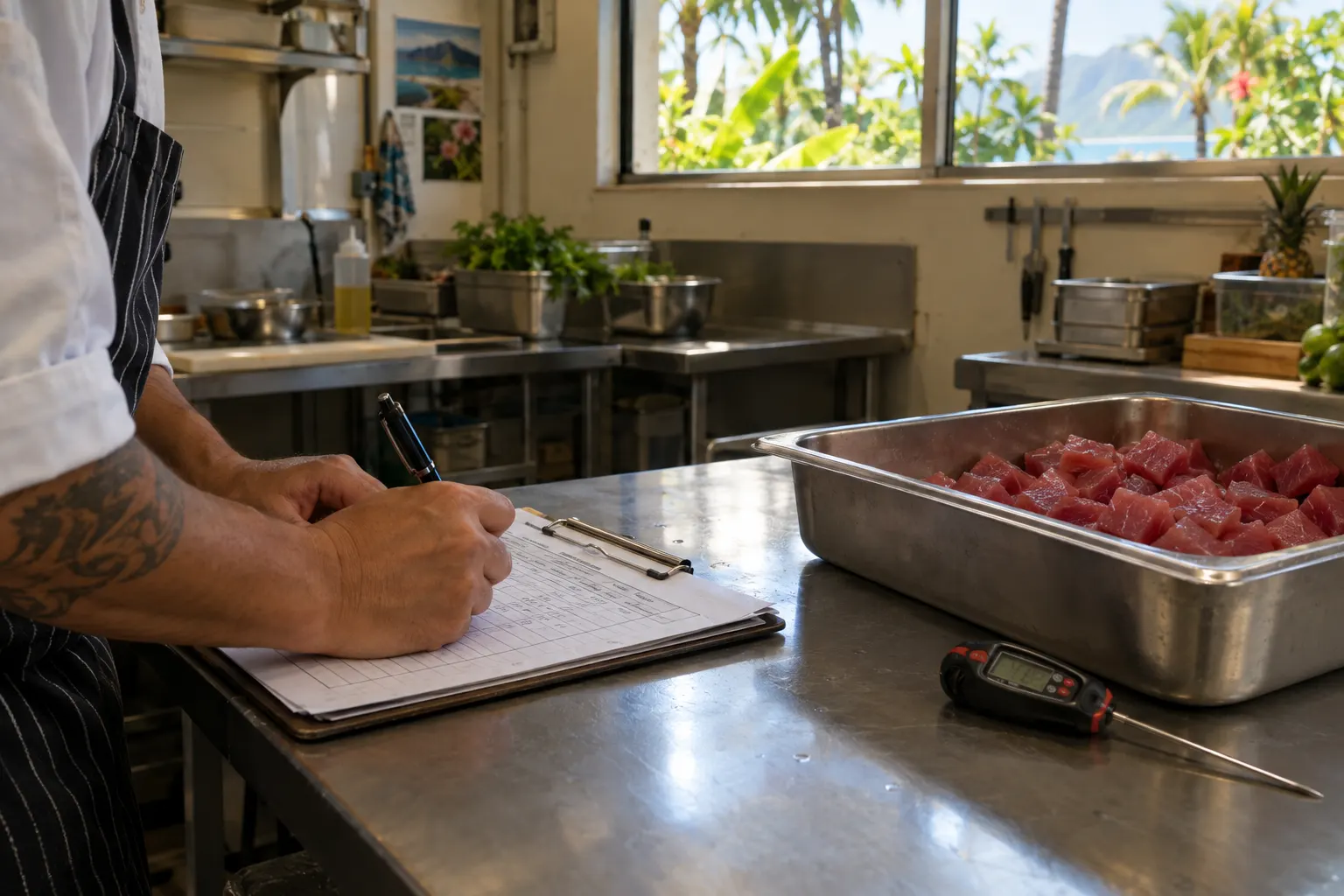
Raw fish must stay at 41°F or colder for the whole service. Nest the pans in ice that reaches the level of the food, keep a probe thermometer at the table, and write down a reading at set times so you can show it was held cold.
FDA Food Code temperaturesVariance process
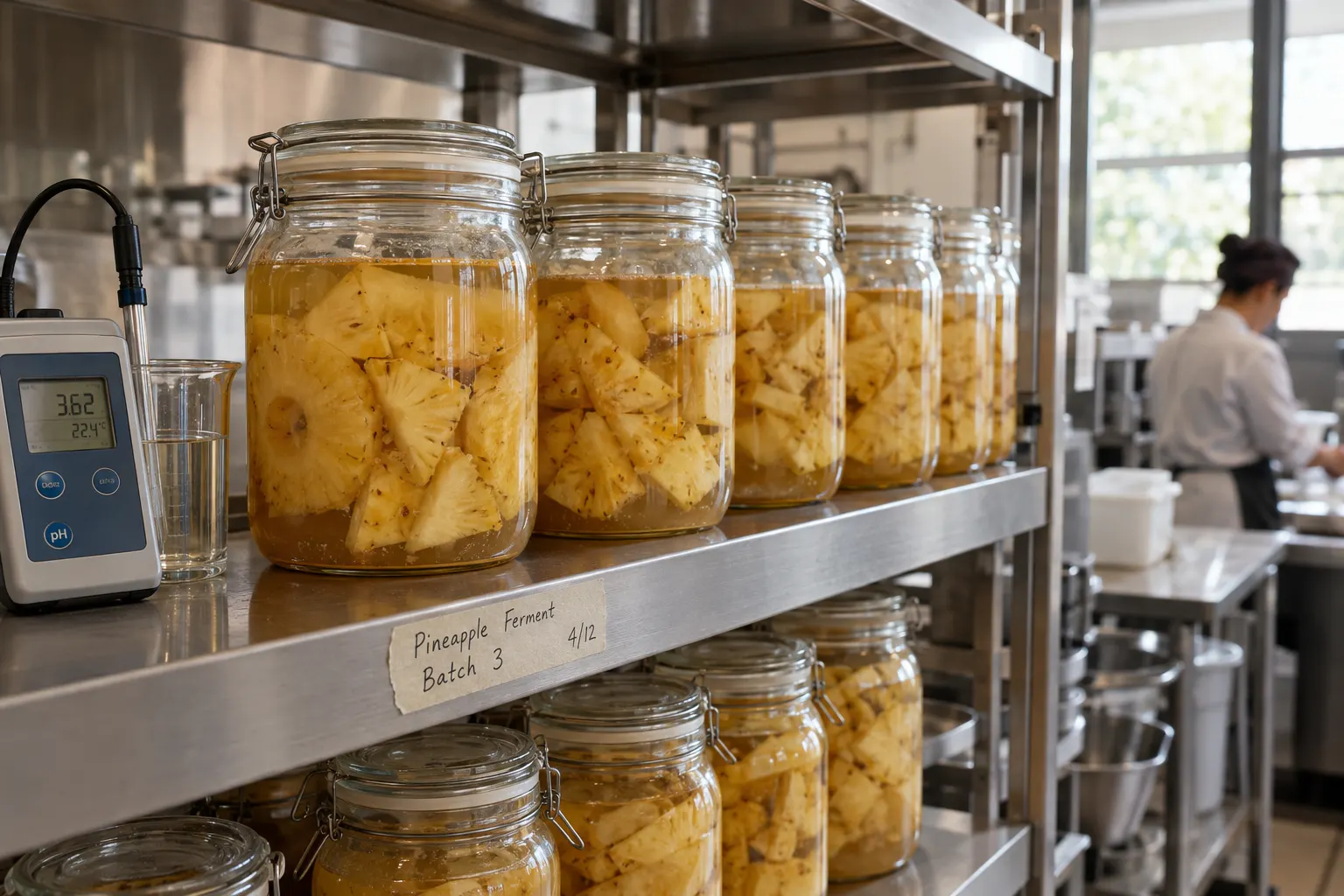
Hawaiʻi DOH lists fermenting among the processes that need a variance and a HACCP plan. Expect to show pH targets, how you measure them, and what you do when a batch misses. Calibrate your pH meter and log it.
DOH HACCP guidanceAbout
Kahua means foundation. The service is run by Paul Hennessey-Kutzen, a chef who works in café kitchens and makes fermented pineapple products at the Wahiawā Value-Added Product Development Center.
Fermentation is one of the processes Hawaiʻi DOH treats as needing a variance, so Paul has worked through the same flow diagrams, pH logs and hazard analyses he now writes for clients. Each plan is built to be followed during a rush, not just to sit on a shelf.
No one can. We write plans to DOH's published requirements and support you through submission and any revisions DOH asks for. You stay responsible for following the plan day to day.
DOH charges a $200 application fee, and an approved variance must be renewed every two years with a complete HACCP plan. Monthly Support clients can have the renewal paperwork handled for them.
We write the plan and records, but some processes, including acidified foods, low-acid canning and certain fermentations, also need validation from a process authority or lab testing. We'll tell you on the first call and connect you with the right people.
Your plan has to change with it. Monthly Support includes plan updates. Otherwise, revisions are billed as additional work at $95 an hour.
Usually a Compliance Check and the SOP Package, plus a HACCP plan if you're fermenting, acidifying or vacuum packing. The Kahua Foundation Package bundles all three. The free talk story call will sort out what fits.
Free talk story call · 20 minutes
We'll reply within two business days to set a time. Bring your menu or product list and a rough idea of your process.